

All About Intercut
Whether you’re writing a screenplay or a novel, intercut can help you tell your story. An intercut is a storytelling technique used to rapidly switch back and forth between two different locations. This might be during a phone call, text message conversation, or parallel action.
An intercut frequently plays around with the sense of time in your story, too. They may reference something that has happened in the past. However, intercuts can also reference to the future, to different versions of ‘now’ (whatever that means), or even thoughts and feelings.
When Intercuts Go Wrong
While intercuts are most obvious in screenwriting, novelists can use them in their books as well. Crime fiction – especially mystery, police procedurals and psychological thrillers – probably uses intercuts the most. However, ANY genre can use them.
It’s important to note that an intercut is NOT a flashback. A flashback is a dedicated scene that abruptly pauses the main timeline to show events that happened in the past. It provides crucial plotting context or hidden character motivations. (Find out about flashbacks, HERE).
In contrast, intercut (sometimes called interlacing or cross-cutting) alternates rapidly between two different scenes unfolding at the same time. Intercut builds tension and momentum, plus they may have an expositional function.
Intercuts go wrong when writers don’t know the difference. As a result, they either over-explain or under-explain in theirs.
The Outsider (2020), s1 ep7: In The Pines, In The Pines
 Let’s take a look at a scene from a TV show mini series in which intercutting is used. The Outsider is a Stephen King adaptation that came out in 2020. Its IMDb page lists its story as:
When an insidious supernatural force edges its way into a seemingly straightforward investigation into the gruesome murder of a young boy, it leads a seasoned cop and an unorthodox investigator to question everything they believe in.
In the part of the story I am spotlighting for this case study, Ralph Anderson (Ben Mendelsohn) is interrogating one of his police squad, Tamika Collins (Hettie Park).
Anderson wants to know something specific in this scene:
“What REALLY happened at your baby’s christening with Jack Hoskins?”
Jack Hoskins is also part of Anderson’s team. He is also one of the main antagonists of the series and set up as such from the first moment we see him. He is confrontational, violent and a rule-breaker.
Also, though Anderson and Collins don’t know it (yet), Jack is also in league with the ‘insidious supernatural force’ mentioned in the IMDB listing.
Pic 1: “I need to speak to you”
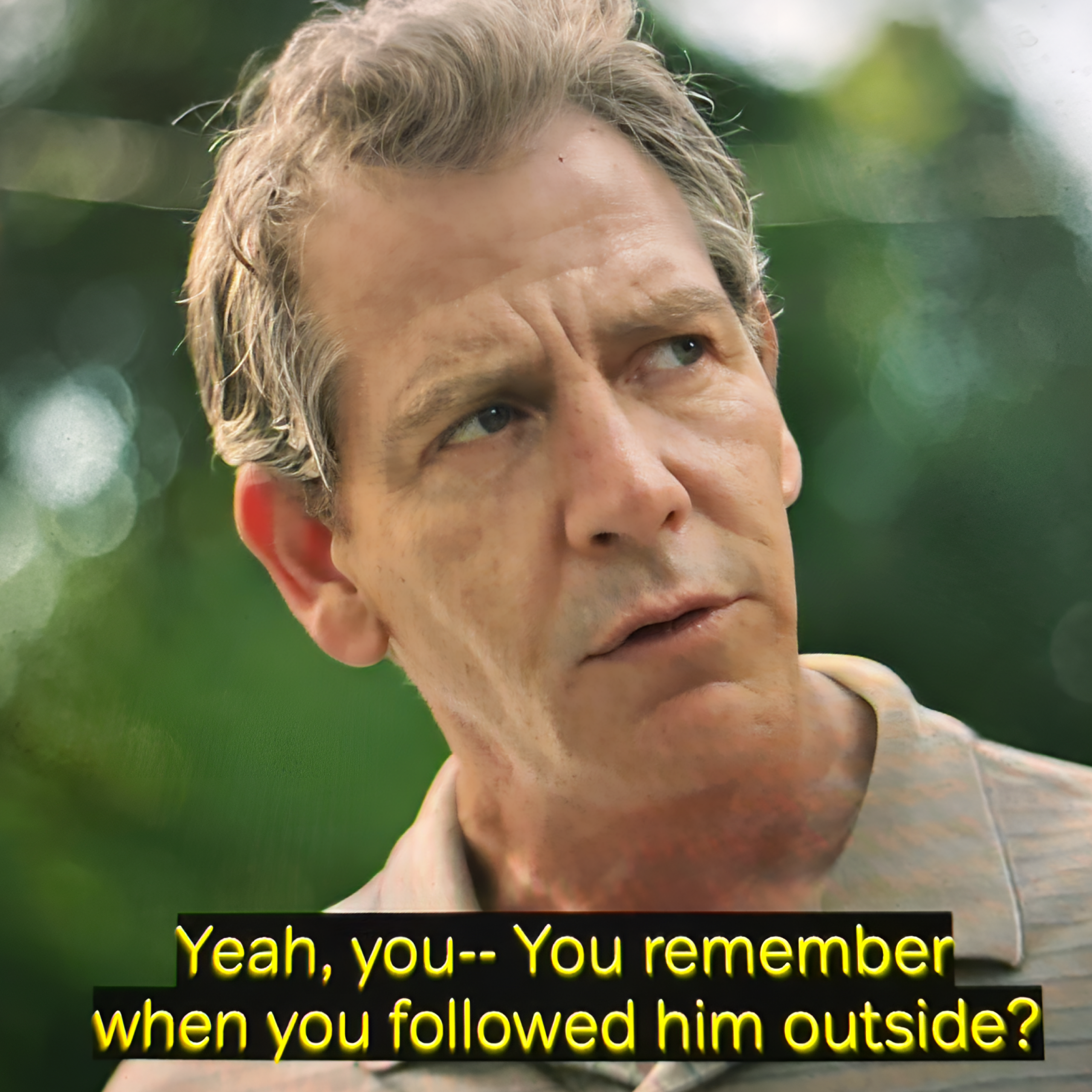 Check out the picture on the right.
Anderson accosts Collins outside her home. They’ve been friends as well as colleagues for years and recently, Collins has had a baby.
She had a christening party for the baby early on in the series. Being part of a close-knit squad, she invited not only Anderson, but Jack as well.
The intercut sequence starts with Anderson reminding her how she followed Jack outside. It’s not fancy or special. It is a set-up – needed for crucial plotting and character context.
Pic 2: She engages with the conversation
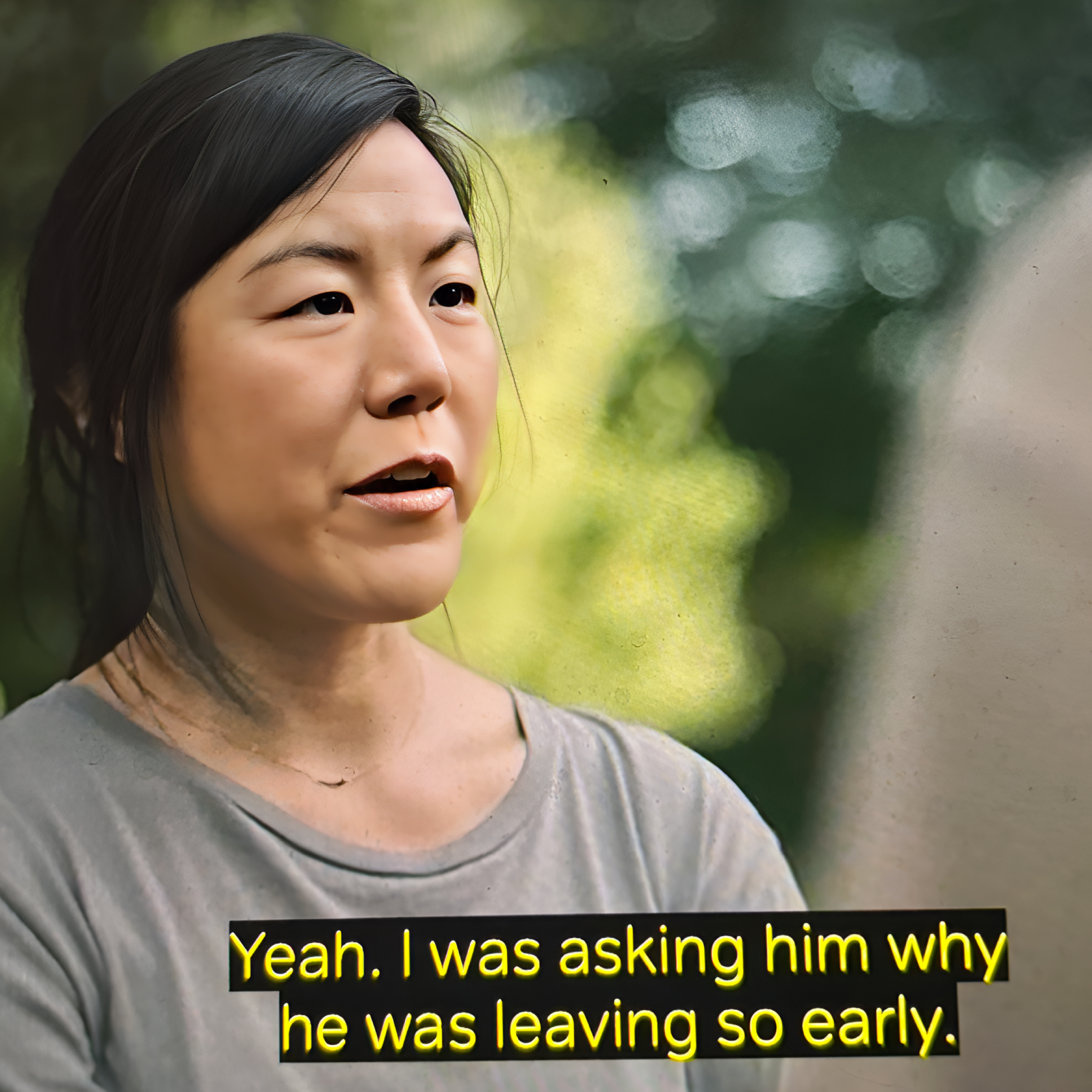 On the picture on the right, Tamika immediately engages with Anderson’s question.
She answers right away, confirming that she remembers. She tells Anderson that she was perturbed about Jack leaving early.
Yet many writers believe – mistakenly – this is ‘too obvious’. This leads to the writer ‘under-writing’ this set up. This leads to scenes in which script readers or novel readers are not even sure why they’re being shown the past at all.
In other cases, writers over-write the dialogue. Characters launch into lengthy explanations with very little prompting.
Pic 3: She is lying to Anderson
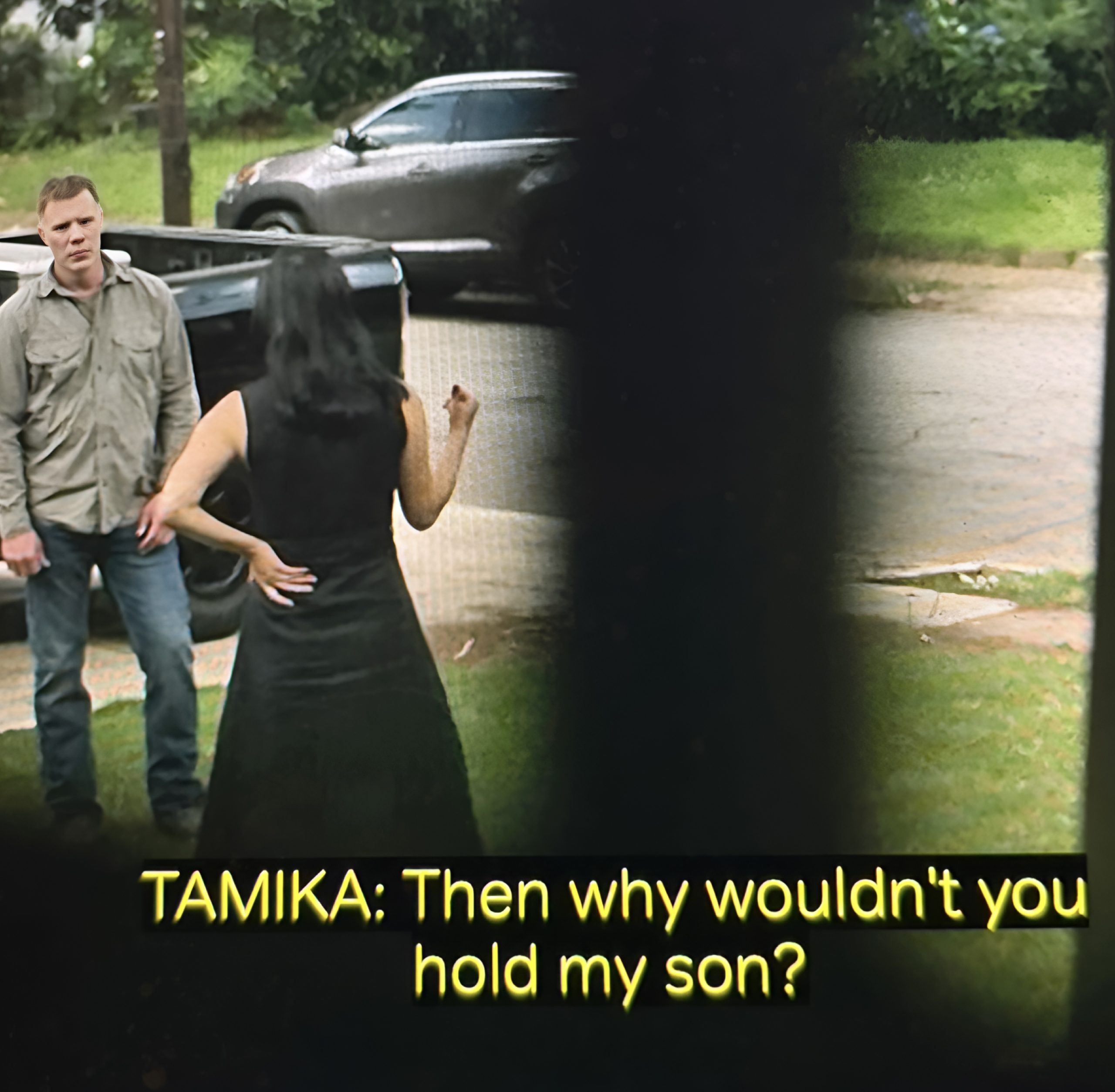
However, when we see the next part of the intercut, we discover Tamika is lying.
She was not perturbed at all that Jack is leaving. She is actually upset that Jack refuses to hold her son! Whether this is misremembered or on purpose, we don’t know yet.
Dramatic irony means the viewer knows more than both Anderson and Tamika in this moment. We already know Jack is an antagonist, in league with that supernatural force.
As the audience, we know that Jack does not want to hold the baby, because he is afraid he will ‘infect’ him. Jack refuses to tell Tamika this, though.
Pic 4: Anderson is there, at that moment
 In the next picture, we discover that in the past, Anderson is looking directly through the door at the heated exchange between Tamika and Jack.
This is very important, because otherwise: how do we know that Anderson knows??
Notice how he does not explain this via dialogue … nor does Tamika ask. There is no need to. The audience understands Tamika had the christening party, plus Tamika already knows Anderson was there (she invited him!).
Writers frequently over-explain the logistics of scenes when there is no need to. An intercut can do the heavy-lifting instead.
Pic 5: “Is there something you’re forgetting?”
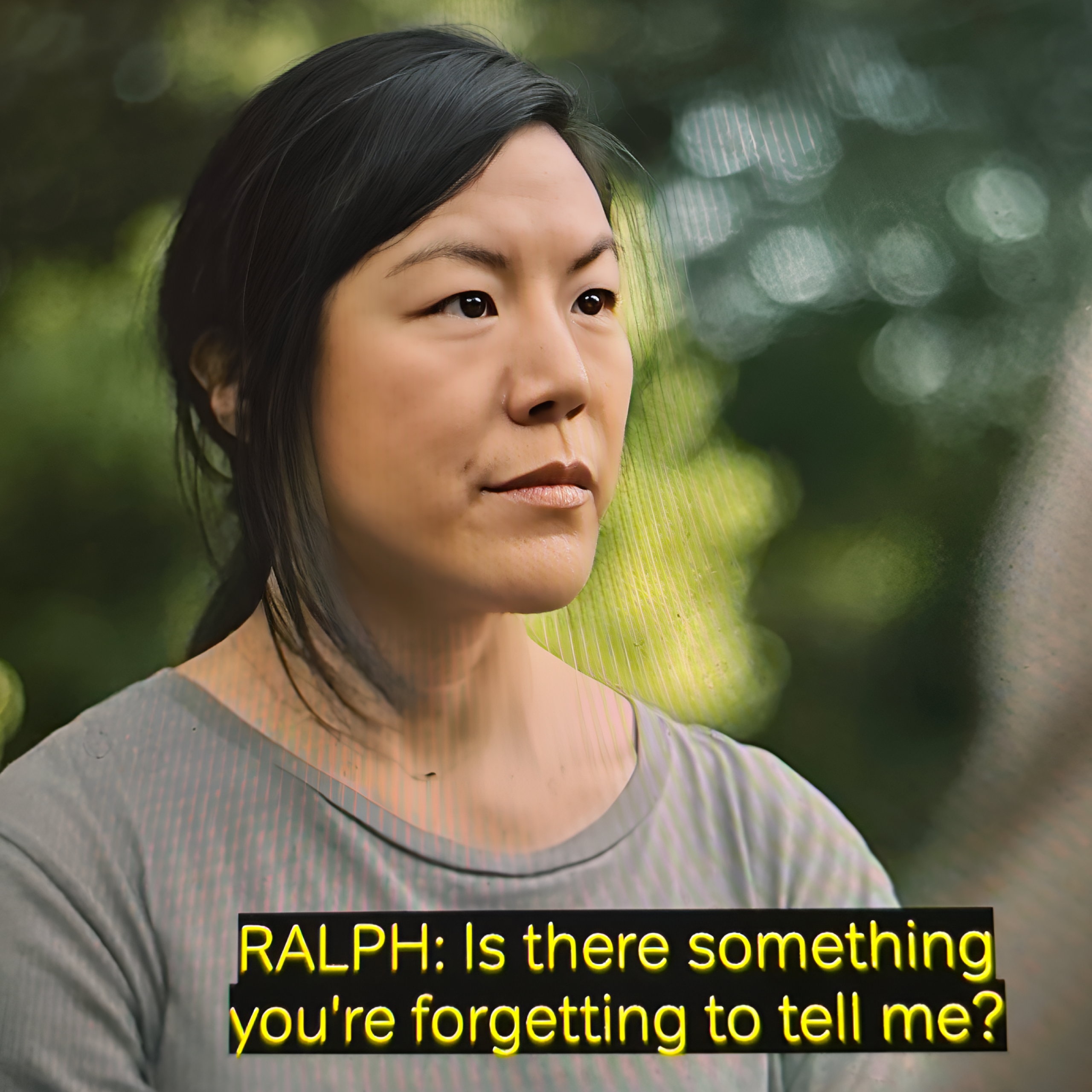 Anderson is written as a very empathetic, intuitive detective. He’s also super low-key, unlikely to be confrontational.
This means he probes Tamika’s version of events, because he can feel something is not quite right. He is also beginning to suspect the case involves something beyond their comprehension (aka that ‘supernatural force’).
So rather than call Tamika a liar, Anderson asks her if there’s something she is forgetting to tell him. It is a fantastic moment that both reveals his character and pushes the story forward.
Pic 6: The Entity (aka ‘supernatural force’)
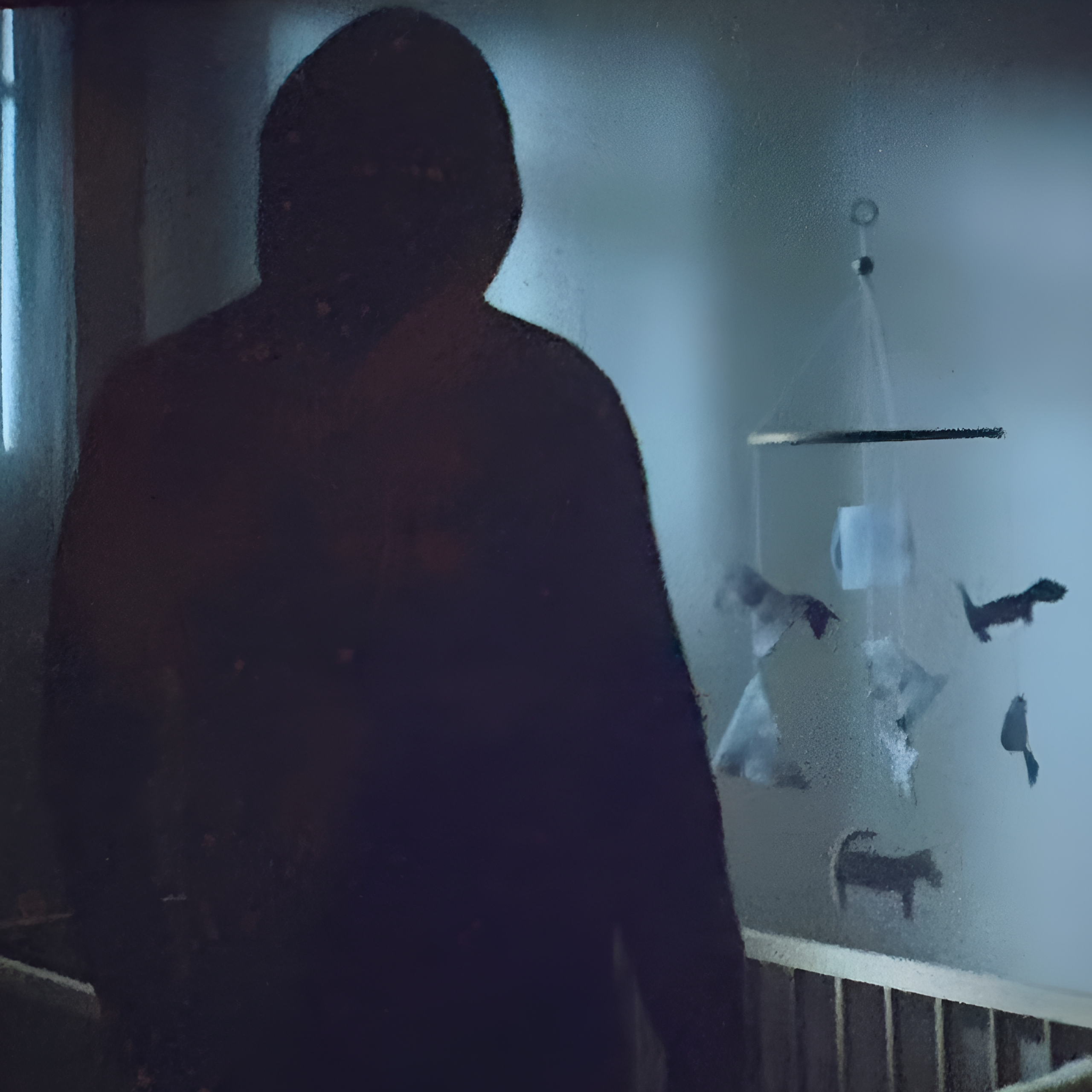 This is where the story really hits us with the real crux of the matter.
As you can see from the pic on the right, the entity stands in Tamika’s baby’s nursery.
We still don’t know what it is, or what it might do, but the threat is obvious. If Tamika tells Anderson the truth, the entity will hurt her child.
This is the moment we realise that Tamika is lying on purpose, even if Anderson still only suspects as much.
Pic 7: Tamika knows that Anderson knows
 Even if she can’t prove it, Tamika knows that Anderson ultimately knows she’s lying.
Notice how she doesn’t start over-explaining, pleading or begging Anderson to believe her.
Instead, she turns the situation around on him. She becomes confrontational, accusing Anderson of saying she’s lying (which she is).
The key in such scenes is not the whole truth. They reveal character and push the story forward, little by little, inch by inch.
Pic 8: “I want to help you”
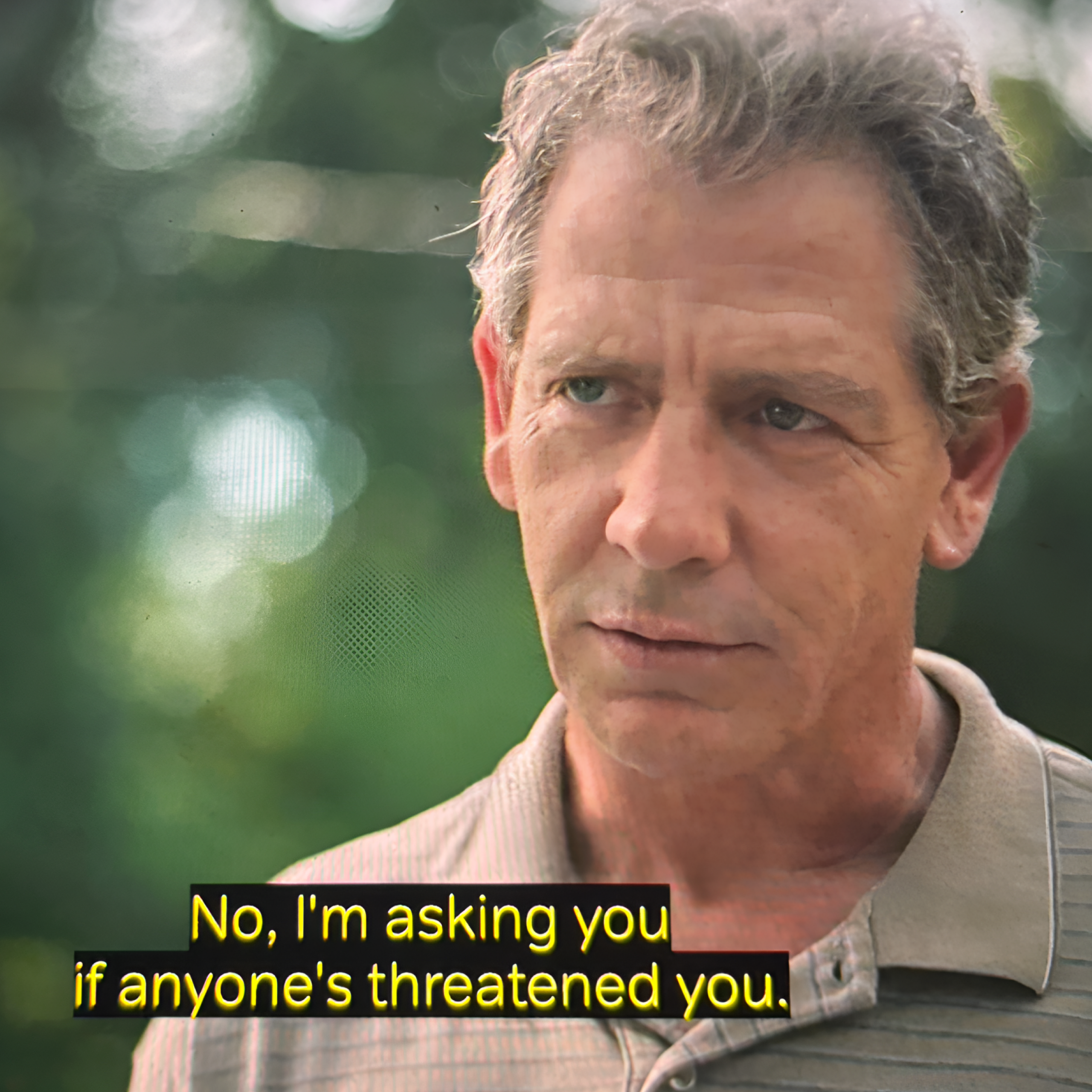 There is no big argument. Remember, Anderson is low-key. He is also friends with Tamika and wants to protect her and her baby.
He does not launch into accusations; instead, he wants to help Tamika. Crucially, being so low-key, he does not say as much. This is a great example of subtext.
There are no big monologues, histrionics or threats here. Great dialogue is concise, to the point and drip-feeds the important stuff … such as revealing character and pushing the story forward!
The exchange reveals who these characters are and what they’re dealing with, visually.
What Writers Can Learn From This Exchange
Regardless of medium, scenes like this one can help you tell your story the following ways …
- Decide on the point of the scene – HOW does it reveal character & push the story forward?
- What writers can’t or won’t say is SUPER important
- Dramatic irony – the audience or reader knowing more than the characters – can be key
- Subtext in dialogue is an important tool
- Visuals and character behaviour beat big dialogue exchanges every time
- Even in a novel, you can include moments in which characters ‘intercut’ like this (even if it is not called that)
So next time you find yourself writing a scene in which important information is exchanged, remember this case study. Never make it easy for your protagonist to get to the truth or to the real crux of the matter.
