Skip to content

research

What 5 Classic Horror Movies Can Teach Us About Theme & Structure

Horror Is In Big Demand In The 2020s Classic horror movies are not just entertaining, they can teach spec screenwriters and filmmakers A LOT. As most of us know, good horror is in demand in the 2020s. Budgets are being cut to the bone right now, thanks to the political and technological furore that has dogged the industry in the post-Covid era. In addition, horror is one of the few genres that can stand up in contained spaces easily, plus a lack of star power … IF it’s done well. I wanted to look at five of my personal favourite… Read More »What 5 Classic Horror Movies Can Teach Us About Theme & Structure
Share this:

The #1 Lie About Female Characters You Should Not Believe

The #1 Lie About Female Characters There’s a #1 lie I hear all the time about female characters. You may have heard it yourself, or even thought it. If you have, it’s not your fault. On the surface, it seems like common sense. After all, blogs like B2W have been warning for years that bad female characterisation is everywhere. So-called self-styled ‘gurus’ online offer all kinds of female character fixes. These may range from sensible but overlooked ones like the ‘fridged woman’ through to the well-meaning but fundamentally flawed, like The Bechdel Test. So what exactly is the #1 lie… Read More »The #1 Lie About Female Characters You Should Not Believe

Share this:

How Intercut Can Help Tell Your Story In Just 8 pictures

All About Intercut Whether you’re writing a screenplay or a novel, intercut can help you tell your story. An intercut is a storytelling technique used to rapidly switch back and forth between two different locations. This might be during a phone call, text message conversation, or parallel action. An intercut frequently plays around with the sense of time in your story, too. They may reference something that has happened in the past. However, intercuts can also reference to the future, to different versions of ‘now’ (whatever that means), or even thoughts and feelings. When Intercuts Go Wrong While intercuts are… Read More »How Intercut Can Help Tell Your Story In Just 8 pictures

Share this:

Top 5 Mistakes Writers Make With Short Films

Short Film Mistakes Writing short films is exceptionally difficult. In recent years, many film festivals have started to prioritise short films that are ten minutes or under. Telling a story in such a short timeframe is a big challenge. As a script editor, I’ve spent a lot of time in the world of short films. In the past 20+ years I have been … Involved with numerous produced films, including award winners & nominated ones A judge for Shore Scripts’ Short Film Fund A mentor on numerous screen agency short film schemes, including BFI New Voices Part of the steering… Read More »Top 5 Mistakes Writers Make With Short Films

Share this:

How Mystery Works: 7 Steps For Writing One In Your Screenplay or Novel

Writing A Mystery Writing a mystery is HARD. I’ve published ten novels now, many of them crime fiction. However, any genre in any medium can benefit from a mystery component. Police procedurals and domestic noir are the key subgenres that use mystery components. There have been over two hundred years of detective novels, plus modern psychological thrillers are super-popular with readers. On TV and in movies, there are frequently mysteries at the heart of thrillers, political or otherwise. We may see them in workplace shows (such as police, but also medical shows in which finding a diagnosis is key). They… Read More »How Mystery Works: 7 Steps For Writing One In Your Screenplay or Novel

Share this:

5 Reasons Your Spec TV Pilot Should Contain A Show-Stopping Central Character

The Problem With Spec TV Pilots One of the biggest issues I see in speculative (not commissioned) TV pilots is a lack of a show-stopping central character. But why is this an issue? Well, if we want our spec TV pilot to be read and/or commissioned by industry pros, a show-stopping central character is non-negotiable. It’s common sense our own TV pilots need to be storytelling catnip for that commissioner. One of the ways we can do this is by creating a show-stopping character. A character so interesting and compelling, big-name and talented actors will want to attach. All About Show-Stopping Central… Read More »5 Reasons Your Spec TV Pilot Should Contain A Show-Stopping Central Character

Share this:

How To Write An Interrogation Scene (And What Most Writers Get Wrong)

All About Interrogation Scenes Interrogation scenes can be exceptionally powerful in our stories. They can be tense, adding to cause and effect, escalating the story towards the showdown. They can also be the moment one character – on either side of the table! – can move from one state of being to another (whatever that means for the story). When writers hear the word “interrogation”, most of us immediately think of police procedurals. Detectives sitting under fluorescent lights trying to get a suspect to crack. Yet interrogation scenes crop up in virtually every genre and type of story imaginable! Such… Read More »How To Write An Interrogation Scene (And What Most Writers Get Wrong)

Share this:

How Your Story’s Opening Tells Audiences What To Expect (And Why It’s SO Important)

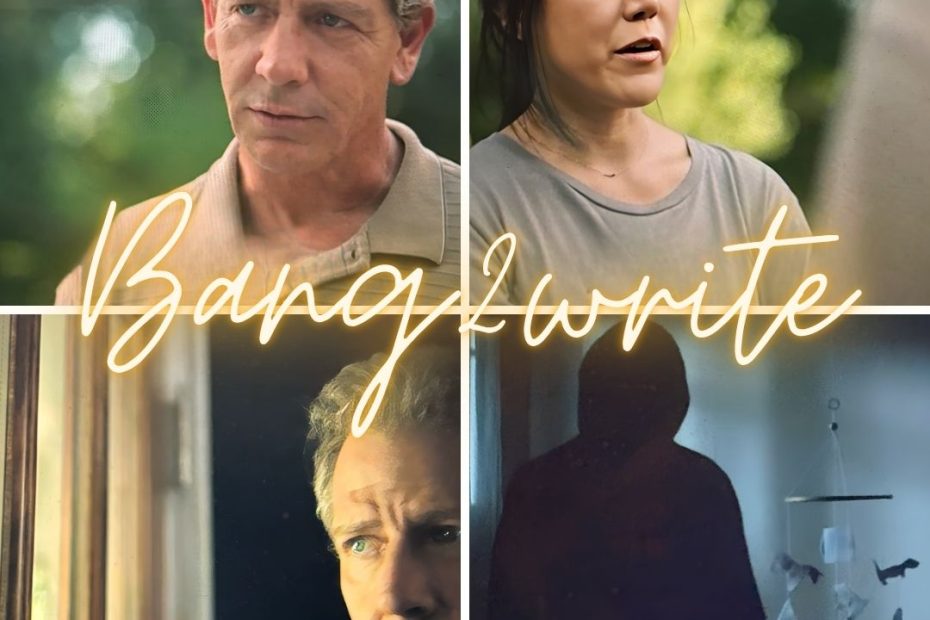
Your Story’s Promise To Your Target Viewers Or Readers Most spec screenplays don’t have a strong opener Instead, they open with generic scenes that could belong to literally any story. Yet *produced* movies and TV shows tell us exactly what we’re in for from the very first moments. All we have to do is really LOOK. 1) Opening With Your Genre Check out these stills I’ve taken of NowTV’s FROM, starring Harold Perrineau. From left to right, top to bottom: 1) The first image is of evergreen trees This shows we are in a rural area, near a forest. It’s… Read More »How Your Story’s Opening Tells Audiences What To Expect (And Why It’s SO Important)

Share this:

Why Your Screenwriting Career Is Stalling (And How To Fix It)

Feel like you’re stalling? If you feel like your screenwriting career is stalling, you’re not alone. The past ten years have created huge problems for the industry. Screenwriting circa 2026 is more challenging than it has ever been. Industry pros have left in record levels, with those that remain telling me it’s the worst they’ve ever seen it. But the point of this post is not to make you feel despondent. Instead, it’s designed to help you stop stalling and get your best chance of getting out of the spec script trenches. Ready? Let’s go … 1) Concept still sells!… Read More »Why Your Screenwriting Career Is Stalling (And How To Fix It)

Share this:

Why Most Spec Scripts Fail (It’s Not The Idea – It’s The Execution)

It’s All In The Execution? Most scripts don’t fail because the idea is bad – they fail because the execution is not doing the work. But how can we tell if our execution is not cutting it? Here’s 8 common pitfalls I see regularly in spec screenplays. Ready? Let’s go … 1) A situation is not a story A cool idea or set-up isn’t enough. Your concept at the heart of your story needs to be road-tested at foundation level. A story = movement. This means your story requires escalation, cause & effect, and a protagonist driving towards a clear… Read More »Why Most Spec Scripts Fail (It’s Not The Idea – It’s The Execution)

Share this:

What Writers Can Learn From The Short Film That Launched a $1 Billion Franchise

Selling, Not Selling Out ‘Write me a low-budget screenplay that launches a $1 billion dollar franchise.’  A producer said this in a room full of writers I was in, back at the very beginning of my career. To say it landed with me BIG TIME is an understatement. It made me realise that story is not the only thing writers must contend with. As a collaborative medium, it’s also our job to come up with ideas that SELL. Of course, this is where writers might say: ‘But I don’t want to sell out!’ I totally get this. It can seem… Read More »What Writers Can Learn From The Short Film That Launched a $1 Billion Franchise

Share this:

How 600 Seconds Can Kill Your Script DEAD

600 Seconds To Victory? NEWSFLASH: 600 seconds can mean the difference between a full read of your spec screenplay … or not. Why 600 seconds? Well, the received wisdom is that a page of script is equal to one minute of screen time*. If a minute is 60 seconds, then your first ten pages = 600 seconds. It really is simple as that. (*Of course, this measurement is not an exact science. Pages with lots of dialogue may be faster, whereas those with more visuals may be longer. But that’s a conversation for another time!). But First, The Elephant In… Read More »How 600 Seconds Can Kill Your Script DEAD

Share this: