Skip to content

structure

How Intercut Can Help Tell Your Story In Just 8 pictures

All About Intercut Whether you’re writing a screenplay or a novel, intercut can help you tell your story. An intercut is a storytelling technique used to rapidly switch back and forth between two different locations. This might be during a phone call, text message conversation, or parallel action. An intercut frequently plays around with the sense of time in your story, too. They may reference something that has happened in the past. However, intercuts can also reference to the future, to different versions of ‘now’ (whatever that means), or even thoughts and feelings. When Intercuts Go Wrong While intercuts are… Read More »How Intercut Can Help Tell Your Story In Just 8 pictures

Share this:

How Your Story’s Opening Tells Audiences What To Expect (And Why It’s SO Important)

Your Story’s Promise To Your Target Viewers Or Readers Most spec screenplays don’t have a strong opener Instead, they open with generic scenes that could belong to literally any story. Yet *produced* movies and TV shows tell us exactly what we’re in for from the very first moments. All we have to do is really LOOK. 1) Opening With Your Genre Check out these stills I’ve taken of NowTV’s FROM, starring Harold Perrineau. From left to right, top to bottom: 1) The first image is of evergreen trees This shows we are in a rural area, near a forest. It’s… Read More »How Your Story’s Opening Tells Audiences What To Expect (And Why It’s SO Important)

Share this:

What Writers Can Learn From The Short Film That Launched a $1 Billion Franchise

Selling, Not Selling Out ‘Write me a low-budget screenplay that launches a $1 billion dollar franchise.’  A producer said this in a room full of writers I was in, back at the very beginning of my career. To say it landed with me BIG TIME is an understatement. It made me realise that story is not the only thing writers must contend with. As a collaborative medium, it’s also our job to come up with ideas that SELL. Of course, this is where writers might say: ‘But I don’t want to sell out!’ I totally get this. It can seem… Read More »What Writers Can Learn From The Short Film That Launched a $1 Billion Franchise

Share this:

How 600 Seconds Can Kill Your Script DEAD

600 Seconds To Victory? NEWSFLASH: 600 seconds can mean the difference between a full read of your spec screenplay … or not. Why 600 seconds? Well, the received wisdom is that a page of script is equal to one minute of screen time*. If a minute is 60 seconds, then your first ten pages = 600 seconds. It really is simple as that. (*Of course, this measurement is not an exact science. Pages with lots of dialogue may be faster, whereas those with more visuals may be longer. But that’s a conversation for another time!). But First, The Elephant In… Read More »How 600 Seconds Can Kill Your Script DEAD

Share this:

Self-Editing Your Draft: From “WTAF?” to “Hell Yes, I Wrote That!”

All About Self-Editing Your Draft Whether you’re writing a novel or a screenplay, self-editing is key. Yet many writers don’t realise self-editing is even a thing! They may get in contact with a script editor like me to tell them what to do. Yet as I always say on this blog and the B2W social media, self-editing is a great idea. Doing this first is always going to get you better, more robust results than going straight to paid-for feedback-givers like B2W. It’s also A LOT cheaper! But how, exactly, do writers self-edit? Here’s my checklist, step by step. Ready?… Read More »Self-Editing Your Draft: From “WTAF?” to “Hell Yes, I Wrote That!”

Share this:

5 Reasons Your Script Is a “Zombie” (And How to Fix It)

Is Your Script A ‘Zombie’? You followed the rules. You hit the beats. Your structure is technically sound …. So why does the script feel dead when you read it back? If your story makes sense but doesn’t move you, you may be dealing with what I call a Zombie Script. This is a term I developed while analysing the gap between Western cause-and-effect plotting (as seen in models like the Three-Act Structure) and Eastern emotional design. A Zombie Script walks, talks, and functions, but it has no pulse. Here are five common reasons scripts go zombie, and how to… Read More »5 Reasons Your Script Is a “Zombie” (And How to Fix It)

Share this:

On Character Motivation: How Your Main Character’s ‘Why’ Powers Your Story

All About Character Motivation Motivation is key in any good story: I call it the ‘why’ of characterisation. Your characters should not simply exist to serve the plot. Instead, they should drive the plot through their own choices, behaviour, worldview, backstory and actions. A subtle difference, but crucial. In other words then, a great character wants or needs something for a reason … and they must struggle to get it. Their ‘why’ may be personal, ranging from the good or neutral, through to the outright evil and villainous. Whatever makes your character act, fight or sacrifice, that ‘why’ is everything.… Read More »On Character Motivation: How Your Main Character’s ‘Why’ Powers Your Story

Share this:

The Genius of THE SHINING: Foreshadowing and Dramatic Irony Done Right

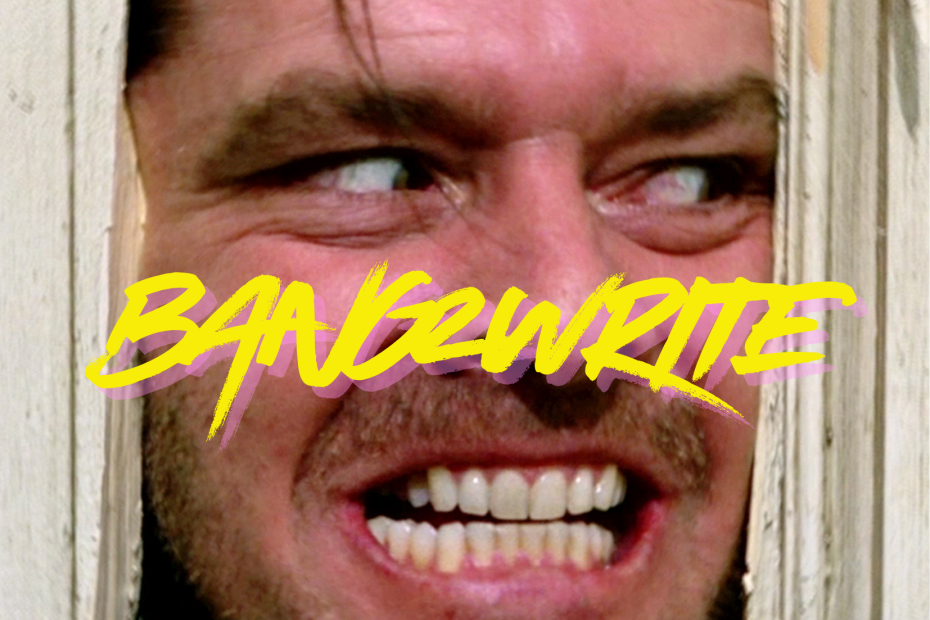
Happy Halloween From B2W The Shining is one of my favourite movies of all time. You may have noticed my fab poster in the background of my Zooms, livestreams and selfies (below). One of the reasons it is one of my favourites is because it was part of my own writing journey. I first watched the movie when I was a teenager. I was a strange kid who loved to watch things over and over in a loop. In doing so, I realised there were a variety of ‘giveaways’ of what would happen in the story. I was confused at… Read More »The Genius of THE SHINING: Foreshadowing and Dramatic Irony Done Right

Share this:

Stuck On Act 2? 5 Tips To Take Your Story Towards A Great Ending

The Dreaded Act 2 ‘Slump’ Screenwriter or author, many – if not most? – writers fear Act 2. Lots of Bang2writers I’ve worked one-to-one with label it ‘The Wasteland’! It’s not hard to see why. While Act 1 is full of promise, plus Act 3 is the ‘wrap up’, so it’s easy (and normal!) to stall in Act 2. Many writers stall because they’re not entirely sure what Act 2 is for. So, breaking it down, Act 2 is for … Escalation of the conflict (with characters ‘climbing walls, each one bigger than the last‘) Development of character arcs, so… Read More »Stuck On Act 2? 5 Tips To Take Your Story Towards A Great Ending

Share this:

How Great Visual Writing Works In Your Screenplay Or Novel

You’ve Heard It All Before: ‘Show, Don’t Tell’ Whether you’re writing a screenplay or a novel, visual storytelling is your secret weapon. Why? Because readers and viewers don’t connect with lists of facts. They connect with images, action and emotion. But how do we write these three things? Well, I’m putting them under the microscope in this blog post with 5 top tips to concentrate on. Ready? Let’s go! Let’s explore how to write visually and bring your scenes – and your characters – to life. 1) Think: Scene Description = Scene Action In screenplays, scene description *is* what we… Read More »How Great Visual Writing Works In Your Screenplay Or Novel

Share this:

Why Characters’ Skills Are SO Important To Your Story

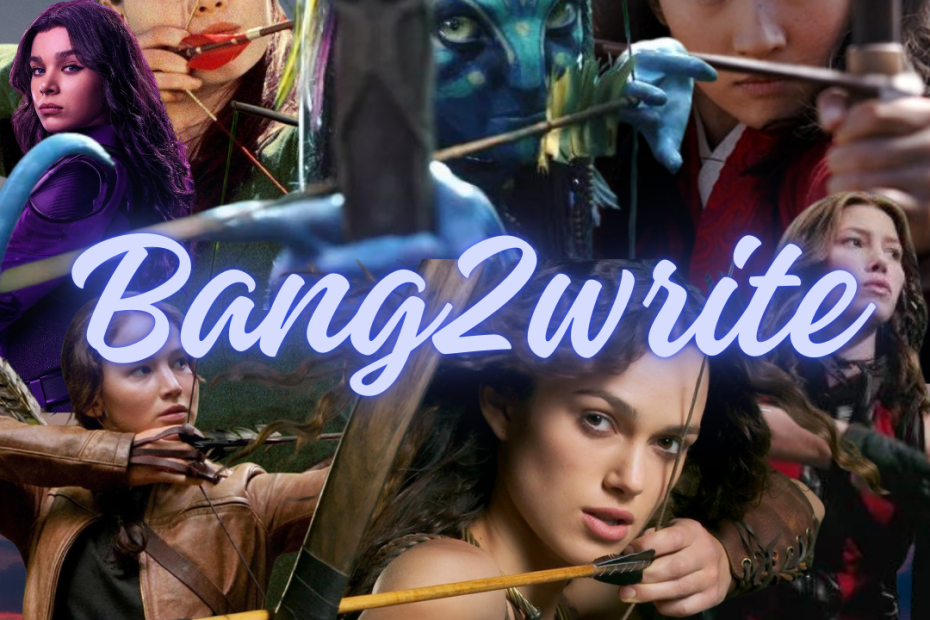
All About Skillsets Memorable characters often stand out because of their unique skills or talents … but these abilities must serve a purpose in the story. So, how can we tell if we’re crafting a character with a meaningful skill or just adding a random trait for the hell of it? It was International Women’s Day at the weekend. So, I thought I’d answer the question of skill and how it plays out with reference to female characters. You know the drill, Bangers: ready … let’s go! Why Skills Are Essential to Characterisation In the 2020s, nuanced and layered characterisation… Read More »Why Characters’ Skills Are SO Important To Your Story

Share this:

An Introduction To Kishōtenketsu, The Art of Plot Contrast Over Conflict

All About Kishōtenketsu If you learned storytelling in the West, you may not have heard of kishōtenketsu. Whilst some literature and screenwriting degrees may include it, most prioritise what I call ‘the transformative arc’.  The most obvious transformative arc is, of course, The Hero’s Journey. A protagonist must go from ‘zero to hero’ while challenging a ‘Big Bad’ of some kind. Most often that protagonist will undergo fundamental changes in dealing with a villain. This villain may or may not be emblematic of ‘The System’. Good examples of villains that are part of ‘The System’ include Darth Vader (The Evil… Read More »An Introduction To Kishōtenketsu, The Art of Plot Contrast Over Conflict

Share this: