

All About The Hunger Games
I’m a huge fan of The Hunger Games. If you’ve read the 2023 update of my Thriller Screenplays book, you’ll know the first book and movie is a case study there. As an example of ‘The Hero’s Journey’ plotting archetype, the story is a good reminder that heroism is not gendered.
Katniss Everdeen is also a GREAT example of a character with a ‘flat arc’ (ie. she doesn’t change). Unlike many heroes, Katniss does not go from ‘zero to hero’. Volunteering as tribute for her little sister Primose is a selfless and heroic act from the start.
Across the series, Katniss never wavers from these attributes. She may rage against the system and how unfair it is that everything is on her shoulders, yes … she is only human. But she will always do what needs to be done.
Yet beyond Katniss and the first book, it is clear The Hunger Games series is deeply thematic. Scratch the surface and there are multiple elements to appreciate. The books and their adaptations are great examples of diversity done sensitively. I’ll be breaking down how, in this case study (with no real spoilers).
Ready? Let’s go …
1) Gender
i) Female Leads and ‘Likeability’
Likeability is a constant stick that beats the female characters in The Hunger Games series. This is just like real life. Women and girls are expected to perform, but only in the way society approves of.
According to Haymich, Katniss has a likeability problem from the off. It’s not hard to see why. Parentified too young, she has the weight of the world on her shoulders even before she steps into the arena. She is the eldest daughter who has been leaned on too long. This can make her harsh and cold at times.
We see this in other female characters in the series, too. The fabulously furious Johanna (Catching Fire) utilises sex to get what she wants. ‘Mean girl’ Maysilee (Sunrise On The Reaping) is privileged by District 12 standards. She is written off by Haymitch as vacuous and self-involved until he gets to know her in the arena.
Even Lucy Gray (A Ballad of Song & Snakes) is headstrong and independent. This is something female leads are frequently criticised for … even by female readers and viewers. The irony!!
The contrast between Katniss and Lucy Gray is striking. Just as Katniss is a fighter forced to perform for the Capitol’s entertainment, Lucy Gray is a performer forced to fight to the same end. MORE: Top 10 ‘Unlikeable’ Female Characters in Movies & TV

ii) Masculinity
The Career tributes such as Cato and Marvel in the first book and movie are exactly like we expect. They’re antagonistic and toxic, certain any vulnerability is weakness. They hunt down the youngest at the Cornucopia like they’re instructed. Had they survived the 74th Hunger Games, they would have grown up a victor like Gloss or Brutus in Catching Fire.
Now consider the representation of Peeta, Katniss’ partner in the games and eventual love choice. He is soft, pliable, weaker (at least strategically) than she is. The product of an unloving home, Peeta recounts how his own mother believed District 12 will finally have another winner … Katniss, not him.
Unlike Gale – the other male lead vying for Katniss’ affection – Peeta is no hunter or military man. Unlike both of them, Peeta understands how to play the game. He is jovial and quick-witted, able to joke on camera. His ‘baby bomb’, designed to try and stop the Quarter Quell is a brilliant move. Sadly, Snow is not fooled.
Peeta keeps almost dying on Katniss; she must bring him back from the brink each time. But Peeta is no gender-flipped damsel in distress. Peeta does the same for her. It’s him who supports her during the psychological attack of the Jabberjays and numerous other times she is overwhelmed. H
But most interesting, Peeta is a chameleon. He is whatever he needs to be: for the Capitol; for the Careers in the arena; for Katniss herself. He is even a literal chameleon, saving himself by painting himself into his surroundings when he is injured.
iii) History and allusion
Plutarch was a biographer in Roman Times, interested in what ‘makes’ a great man. He wanted to know what constituted virtue and character in such individuals. He wasn’t primarily focused on historical accuracy, but rather on moral and ethical lessons gleaned from them.
It is no accident then his namesake Plutarch Heavensbee in The Hunger Games is similar. Presenting first as an antagonist, he is revealed as a double agent. He is given the job of ‘propo’ (propaganda) in Panem. He first does this job for President Snow, then on behalf of the rebels.
His resistance to the Capitol is seeded in Sunrise on the Reaping with Haymitch, and comes to fruition in Catching Fire and beyond. Like Cinna, Plutarch is instrumental in making Katniss The Mockingjay. It is also his daring plan that fools not only Snow, but Katniss herself into finally breaking the arena. He is not a Gamesmaker, but a righteous destroyer. MORE: Rethinking Masculinity: How To Write A Memorable Male Character

2) Disability
Disability is frequently overlooked in The Hunger Games universe, yet it’s central to the narrative in subtle ways.
i) Visible disability
Peeta’s loses his leg at the end of the 74th Hunger Games and is fitted with a prosthetic. This detail, present in the books, is largely erased in the films. (2012 was a different time in Hollywood, so perhaps it did not fit the perceived view of a romantic male lead back then). But in the books, it matters: Peeta limps. He’s slower. He suffers. And still, he fights. He persists.
Beetee, the tech genius from District 3, uses a wheelchair in Mockingjay after being injured in the arena in Catching Fire. His brain is his biggest weapon. Though his disability is visible, it’s never what defines him. Like many disabled people, he is valued for his usefulness, but not always respected for his humanity.
In recent years, disabled actors have been cast in the newer movie instalments. Wovey has Down syndrome; Bobbin has just one arm. While Bobbin is still deeply dangerous, Wovey is innocent and helpless. Twelve-year-old tributes frequently die first in the Bloodbath. If the Capitol sends small children, why would they make any special dispensation for disabled kids? Short answer: they would not. This lays bare the savagery of the games and the people who dreamt them up.
The fact that Dean of the Academy Casca Highbottom is himself a little person adds an extra layer of dramatic irony. He might have attempted to kill off the games as he claims … but we only have his word for that. It also seems his anger at Coriolanus’ long-dead father takes precedence, since Highbottom appears to make zero attempt to rein in Dr. Gaul.
ii) Invisible Disability
Peeta’s cognitive disability post-hijacking in Mockingjay is even more interesting. He’s a victim of psychological torture, chemically altered to mistrust the person he loved most: Katniss. He must work through trauma, memory loss, and violent, intrusive thoughts.
This is PTSD dialled up to 11, yet it’s never framed as a weakness. Peeta’s return to himself is quiet, but heroic. He takes responsibility for the terrible things he says and does in the grip of his episodes, including trying to kill Katniss and murdering a soldier.
Trauma becomes a kind of invisible disability throughout the series. Mental health commentary is present from the first books in Katniss’ mother, but also in the traumatised Wiress and Annie. District 4 victor Finnick counsels Peeta to ask if he can’t work out what’s real. This is a simple, yet effective way of dealing with psychosis and other similar conditions.
In Sunrise on the Reaping, Haymitch’s trauma post-Games is obvious. He self-medicates with alcohol, detaches from others, and resists relationships. He drives people away to save them and himself from further pain.
Some readers and viewers also see Beetee as an autistic character; Wiress, a fellow winner from Catching Fire, too. While physical prowess is important in The Hunger Games, numerous victors have survived by their wits. None are true winners. As Haymitch says: no one ever wins the games, just survives. MORE: 10 Quick Tips On Writing Disabled Characters

3) Race
i) Rue, District 11 & Whitewashing Katniss?
The treatment of race in The Hunger Games has been a flashpoint since Rue and Thresh were cast as Black in the movies. This was despite them being described as having ‘dark brown skin’ in the books. The racist backlash to this reveals as much about readers and audiences as the stories themselves.
Rue’s death is devastating not just because she’s a child, but because she’s symbolic. She is a young Black girl dying in the arms of a white protagonist, while a white-dominated Capitol watches on. This is racialised trauma, echoing real-world violence.
Then of course Katniss herself: is she indigenous, Appalachian or white? In the books it is never clear, though of course the white Jennifer Lawrence plays her in the movies.
While some believe Katniss was whitewashed, I subscribe to another school of thought. I believe she is purposefully ambiguous in the books. This would sidestep the ‘Great White Hope’ trope and enable more teenage readers to see themselves in Katniss. It is also clear Suzanne Collins is committed to thematics and never writes anything by accident.
ii) New, deeper racial representations
In the past 10-15 years, reader and audience preferences and understanding of race in fiction have radically changed. In 2020’s The Ballad of Songbirds and Snakes and its 2023 adaptation, District 11 is again portrayed as predominantly Black.
District 11 tribute Reaper is presented as ‘scary black man’ via the Capitol’s eyes. A harvester like all his people, his name has a double-meaning. He is also the product of adultification. Yet like Thresh in the first book and movie, Reaper has mercy. He doesn’t bury just his allies, but *everyone* on the field. A bold act of resistance and dignity: deliberate, visual, humanising. A reclamation of death. As he says to the cameras: ‘Are you going to punish me now?’
Don’t forget Dr Gaul, either. She is unusual in that she is a female ‘mad scientist’ trope, even more so as a black woman. Her horrifying creations don’t just include the mutts, but also eventually Coriolanus Snow himself as her protégé. Yet more dramatic irony.
iii) Historical and Biracial allegory
The Covey, Lucy Gray’s beloved family, are nomad musicians with their own culture and traditions. The parallel with Romany travellers is unmistakable… even before we hear from Lucy Gray that the Capitol ‘rounded them up’ and stuck them in District 12. Just like the Nazis who did similar to Romany people, District 12 becomes a concentration camp. Collins also creates a link between Snow and Haymitch in Sunrise On The Reaping via Lucy Gray and Haymitch’s own Covey paramour, Lenore Dove.
Sejanus Plinth, while coded as white in appearance, is a racialised figure by narrative function. He’s from District 2 but lives in the Capitol due to his father’s wealth. He’s treated as an outsider and doesn’t belong anywhere. Sejanus is too soft for the Capitol, too rich for the rebellion. He is trapped in-between. This is a position often felt by children of immigrants.
Race is never explicitly central in the story in The Hunger Games series. Nevertheless, the divides between Districts and the Capitol mirror class and racial divides in the real world … from food deserts to political disenfranchisement.
4) LGBTQ+
i) Asexuality
LGBTQ+ characters are mostly subtextual in The Hunger Games universe, but they’re definitely there … if you know how to look.
Some read Katniss as asexual. There is some evidence for this, especially when Katniss is contrasted against Lucy Gray. While Lucy Gray knows how to use her feminine wiles even in a survival situation, Katniss does not. As she play-acts the romance with Peeta for the Capitol, she seems naive, wooden. Yet Lucy Gray knows from the moment she meets Coriolanus that he is a lifeline, so she accepts his gift of a rose. She even counsels the others to spare him in the van.
Overall, Katniss appears to have a lack of interest in romance. She seems more set on platonic relationships and responsibility. That said, she never becomes an ‘ice maiden’ stereotype. Her friends are everything to her; romance is a distraction. Though she loves and makes a life with Peeta and has his children, it is a quiet, stable life she craves.
ii) ‘Typical’ and atypical presentation
Cinna is widely read as queer. His fashion-forward persona, empathetic nature, and quiet rebellion align with classic queer-coded characters. His resistance is soft power. He doesn’t pick up a weapon; he sews one into a dress. This still condemns him to death like any soldier.
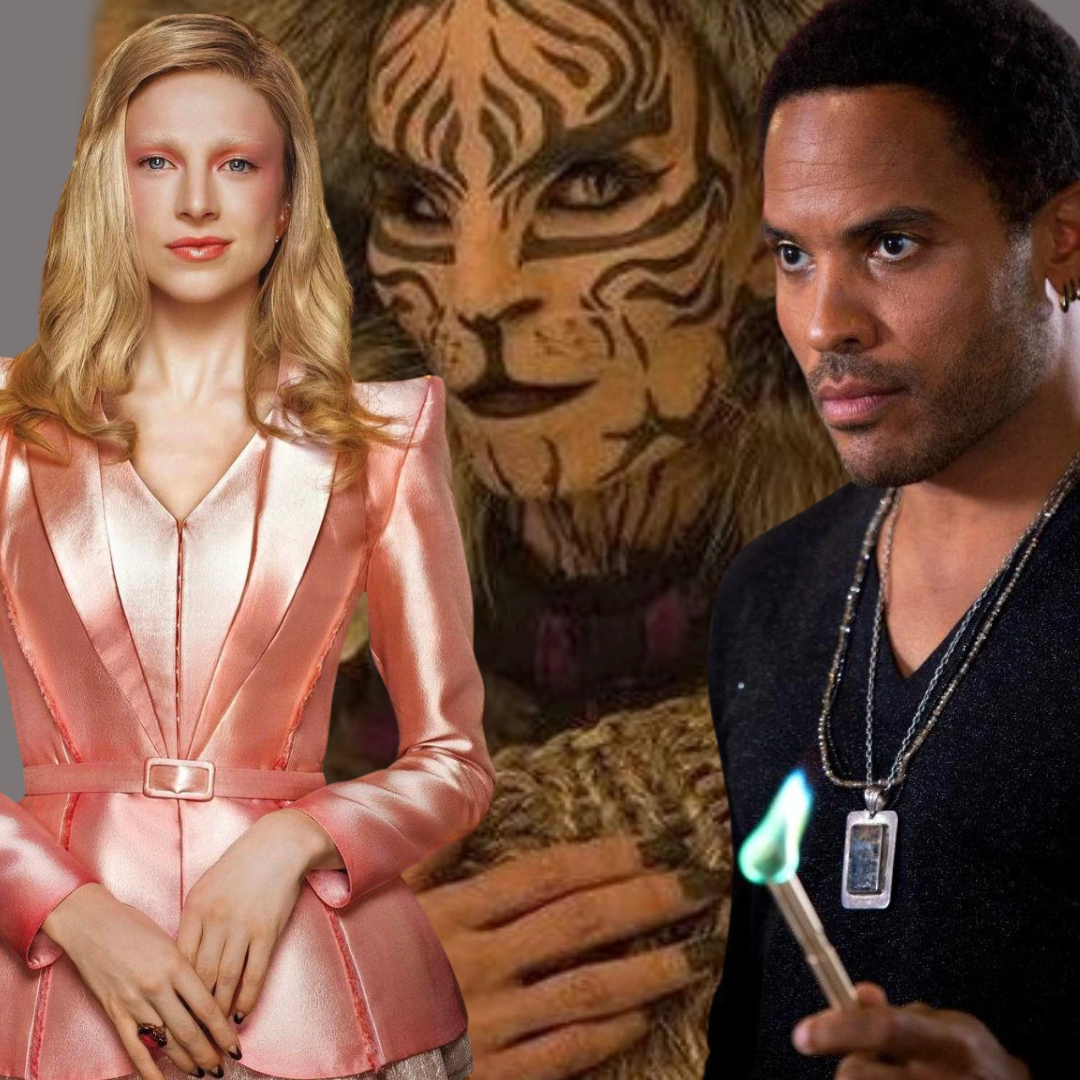
The relationship between Tigris and Snow (in The Ballad of Songbirds and Snakes) hints at a deeper complexity. Tigris is not just a stylist, she’s an aesthetic dissenter. Her transformation is both gender and species nonconforming. She is also played by trans actor Hunter Shafer.
By Mockingjay, Tigris appears more feline than human. In the Capitol, where the body is a canvas of control, Tigris refuses human norms entirely. It’s a subtle nod to queerness as a rejection of conformity.
 iii) Under the surface
LGBTQ absence can also be telling. In a world so tightly controlled by the Capitol, who gets to love openly? There were no out queer relationships in Panem’s official storylines until A Ballad of Songbirds And Snakes where one character is mentioned as being in a relationship with another man.
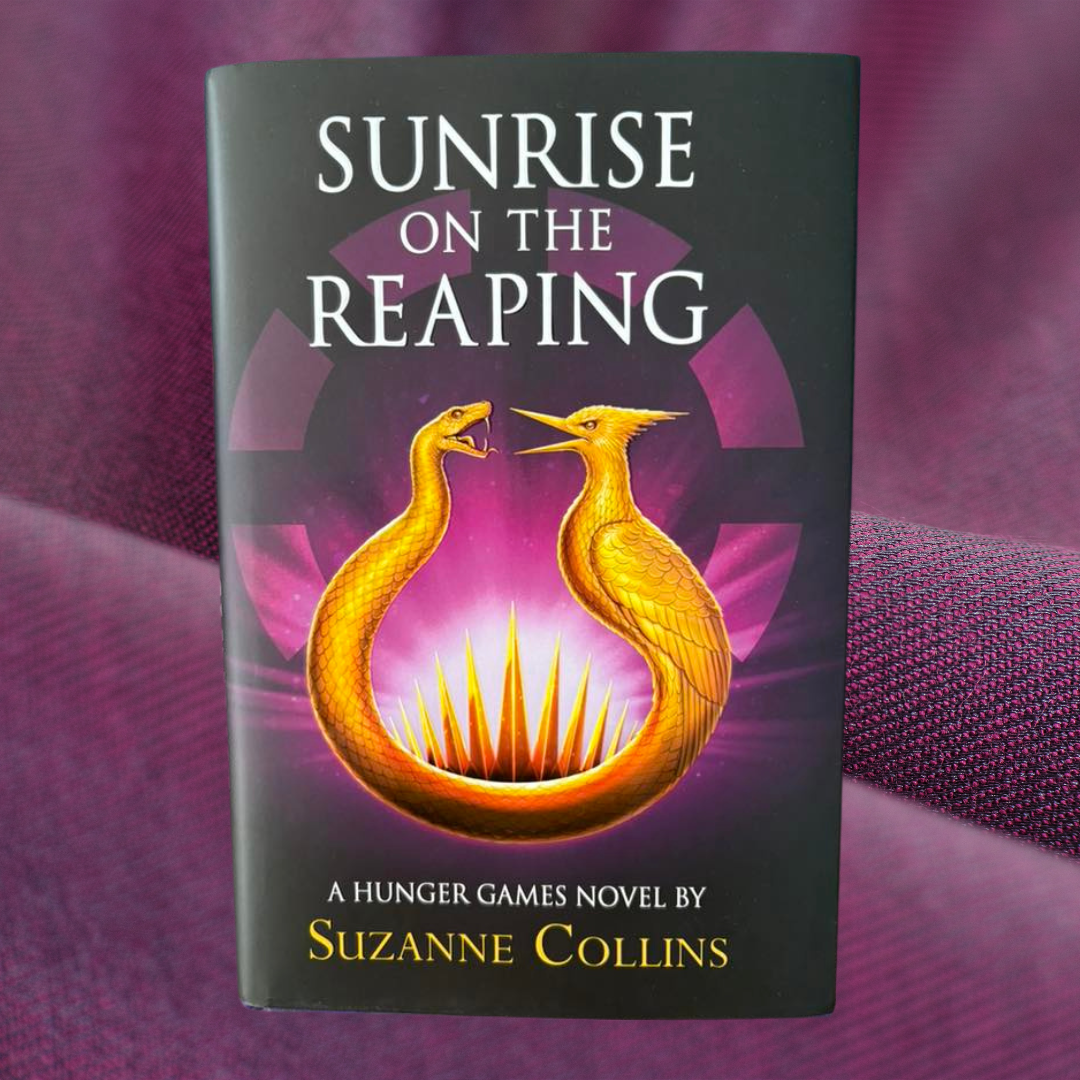
2025’s Sunrise On The Reaping added this with Tam Amber and Clerk Carmine in The Covey, Lenore Dove’s Uncles. Haymitch mentions it is dangerous for the men to be open about this. This is yet another way in which the Capitol system erases identity.
The Hunger Games may not feature overt LGBTQ love stories. Its queerness lies in its margins … In coded performances, in quiet resistance, in who gets to survive and who gets to speak. MORE: 30 Years of Priscilla, Queen of The Desert: What Writers Can Learn From This Queer Classic
Last Points
Perhaps you saw all of this – or at least some of it – in the books and movies … perhaps you didn’t. It’s also possible to dislike certain elements of representation, while appreciating others. Personal interpretation is key to appreciation. What’s more, no story is ‘perfect’. Perfection is not – and should never be – the endgame in fiction.
Wherever you land, Suzanne Collins is proof that sensitivity is key in writing complex themes and topics. She has created a rich and intricate storyworld, with authentic characterisation, strong genre conventions and lean plotting.
None of this can be achieved by the power of intuition alone. Sensitivity requires dedication, hard work and humility. Understanding what we don’t know first enables writers to dig deep and create meaningful stories.
